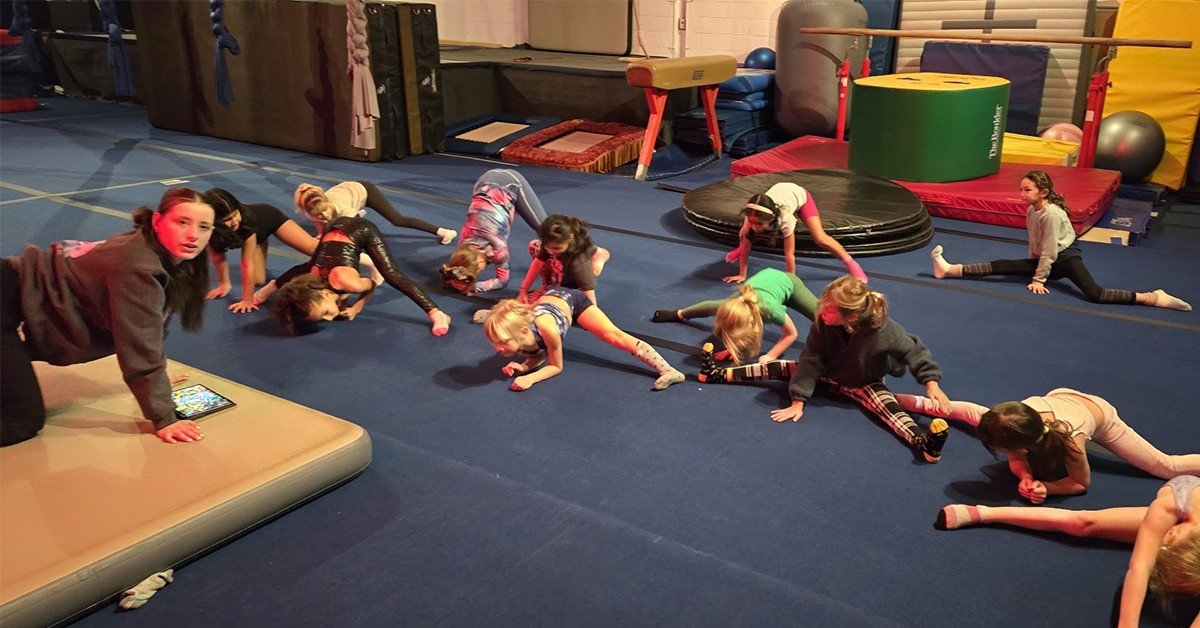
Children's gymnastics is much more than learning handstands, cartwheels, or routines. Kids Gymnastics Pickering can introduce young participants to foundational movement skills that support balance, coordination, strength, mobility, body awareness, and confidence. Effective early training does not rush children toward advanced skills. It develops the physical and technical foundations that make future skills easier to learn and control.
For parents, understanding these foundations makes it easier to evaluate a program. Age, experience, physical development, readiness, and individual learning pace should all influence how a child progresses.
Fundamental Movement Comes Before Advanced Skills
Gymnastics requires children to control movement in multiple directions and positions. Before progressing to advanced skills, they benefit from learning how to jump, land, roll, balance, rotate, support body weight, and move between positions.
These movements establish the foundation for more complex skills. Controlled landing, for example, teaches children to absorb force through the ankles, knees, and hips, while weight-bearing through the hands introduces the physical demands of handstands and other inverted movements. Rolling develops body awareness and an understanding of momentum.
These may appear simple, but they teach children how to organize and control their bodies during movement, making them an important part of physical literacy.
Strength Should Develop Alongside Body Control
Gymnastics strength is closely connected to movement control. Children may develop upper-body strength through hanging, climbing, supporting their weight on their hands, or maintaining specific positions. Lower-body strength develops through jumping, landing, squatting, and controlled takeoffs, while trunk strength helps maintain body position during movement.
Relative strength is particularly important because gymnasts frequently need to control their own body weight rather than simply move external resistance.
The goal during early development is not maximum strength. It is sufficient strength to perform age-appropriate movements with increasing control and technical consistency.
Balance, Coordination, and Body Awareness Work Together
Balance involves more than staying still. The body continually uses sensory information and muscular adjustments to maintain stability.
A child balancing on a narrow surface or holding a gymnastics position must make small corrections to remain controlled. Coordination develops alongside this process as the arms, legs, trunk, and head learn to work together in specific sequences.
Gymnastics also develops proprioception, the body's ability to sense position and movement. Children gradually learn where their limbs are positioned, how their body is oriented during rotation, and how changes in position affect balance and momentum.
Together, these qualities help children become more aware and efficient movers.
Mobility Supports Better Movement Quality
Flexibility is often associated with gymnastics, but flexibility alone does not create good movement.
Children need sufficient usable range of motion combined with the strength and control to move through that range. A controlled leg lift, for example, requires more than flexible hamstrings. It also involves hip strength, trunk stability, coordination, and pelvic control.
This distinction becomes increasingly important as skills become more demanding.
Appropriate mobility work should help children access the positions required for their current level without making extreme flexibility the objective. Training should respect individual physical development and avoid forcing ranges of motion that a child cannot control.
Landing Is a Skill Worth Developing Early
Landing is an important part of gymnastics because children repeatedly perform jumps, hops, leaps, and eventually dismounts.
A controlled landing involves more than bending the knees. The ankles, knees, hips, trunk, and arms need to coordinate while the athlete manages their centre of mass and absorbs force progressively.
Early landing drills can therefore establish movement habits that become increasingly valuable as skills become faster, higher, or more complex.
Learning to absorb and control force is a fundamental athletic skill, not simply a preparation for one particular gymnastics movement.
Boys and Girls Need Strong Foundations
The fundamental principles of gymnastics apply to both boys and girls. Strength, mobility, balance, coordination, body awareness, and progressive skill development remain important regardless of eventual specialization.
When considering Boys Gymnastics Pickering, parents may encounter pathways that eventually emphasize apparatus such as floor exercise, pommel horse, rings, vault, parallel bars, and horizontal bar.
Similarly, Girls Gymnastics Pickering may eventually involve vault, uneven bars, balance beam, and floor exercise in competitive settings.
However, these later differences should not obscure the common foundations developed during early training. Individual interests, strengths, experience, and developmental readiness are more useful factors for determining progression than assuming boys and girls require completely different foundational training.
Progression Should Follow Readiness
Children should not advance to a difficult skill simply because another participant of the same age has already learned it.
More advanced movements generally require appropriate strength, mobility, coordination, balance, body awareness, and technical understanding. Instructors can use preparatory drills to develop those qualities before introducing greater complexity.
This also recognizes that children develop at different rates. One child may have excellent coordination but need more time to develop strength, while another may be physically strong but require additional practice with balance or mobility.
A well-structured program therefore bases progression on skill readiness and technical control, not simply age or a predetermined sequence.
What Parents Should Look for in a Gymnastics Program
Parents can look beyond how many advanced skills children perform when comparing gymnastics programs.
A strong training environment should provide age-appropriate progressions, appropriate supervision, suitable equipment, clear technical instruction, and opportunities to develop foundational movement before advancing.
It should also recognize individual differences. Children should be challenged, but the challenge should match their current ability and physical readiness.
A development-focused approach treats strength, mobility, coordination, landing mechanics, balance, and body awareness as meaningful achievements rather than rushing toward increasingly difficult tricks.
Considering Training From Nearby Communities
Families searching for children's gymnastics do not necessarily need to limit their options to the community where they live. Families in Ajax, Whitby, and Scarborough may also consider travelling to Pickering when the program and training environment suit their child's needs.
Ajax is approximately 6 miles from Pickering, while Whitby and Scarborough are each approximately 15 miles away. For families comfortable with the journey, these distances may make Pickering a practical option when evaluating specialized gymnastics training.
The geographic distinction remains important. A facility located in Pickering should be represented as a Pickering facility rather than as a gymnastics facility physically located in Ajax, Whitby, or Scarborough.
Travel distance is only one consideration. Coaching experience, class structure, progression methods, supervision, equipment, and the child's individual goals can all influence whether a program is appropriate.
Building Skills That Extend Beyond the Gym
The value of early gymnastics extends beyond individual tricks.
Children learn to control their bodies, interpret movement feedback, coordinate multiple actions, manage balance, and approach challenging skills progressively. They also learn that improvement comes through practice, correction, and consistent development rather than immediate success.
The objective is not simply to produce a child who can perform an advanced movement. It is to establish a broad foundation of strength, coordination, mobility, spatial awareness, body control, and confidence that can support continued physical development.
Build Strong Foundations With ABS Gymnastics and Circus
Ready to help your child develop strength, coordination, balance, flexibility, and body awareness through structured gymnastics training? ABS Gymnastics and Circus provides progressive gymnastics instruction in Pickering designed to help children build skills at an appropriate pace while developing a strong foundation for continued physical development.
FAQs
1. What age can children start gymnastics?
Children can begin gymnastics at different ages depending on the program and their developmental readiness. Early classes generally focus on fundamental movement, balance, coordination, body awareness, and age-appropriate strength rather than advanced skills.
2. Does my child need previous gymnastics experience?
No. Beginner programs can introduce children to foundational movements before progressing toward more complex skills. Current ability, confidence, coordination, and physical readiness are more important than previous experience.
3. Do boys and girls follow different gymnastics training?
The foundational principles are generally the same for boys and girls, including strength, balance, coordination, mobility, body awareness, and progressive skill development. Competitive pathways may eventually involve different apparatuses and event structures.
4. How does gymnastics help develop physical skills?
Gymnastics combines jumping, landing, balancing, rotating, weight-bearing, and controlled movement to develop qualities such as strength, coordination, mobility, spatial awareness, and proprioception.
5. How should children progress to advanced gymnastics skills?
Progression should be based on technical and physical readiness rather than simply age or enthusiasm. Children benefit from developing the strength, mobility, coordination, balance, and movement control required for a skill before advancing to greater complexity.
0 Comments