What You See and What We See Are Different Thing
Most parents watching gymnastics classes in Pickering are focused on whether their child is keeping up or having fun. That makes sense. But coaches are watching something else. From the moment a kid walks onto the floor, we are picking up on things most parents would never think to look for. And those things tell us more about a child's potential than any single skill ever will.
How a Child Handles a Failed Attempt
This is the first thing coaches notice. When a child misses a skill or falls, what do they do next? Do they try again? Do they look for reassurance? Do they go quiet? In gymnastics classes in Pickering, how a child deals with failure is one of the clearest things we watch for. A kid who shakes it off and goes again on their own is already ahead, no matter where their skills are right now.
Body Awareness and Natural Tension
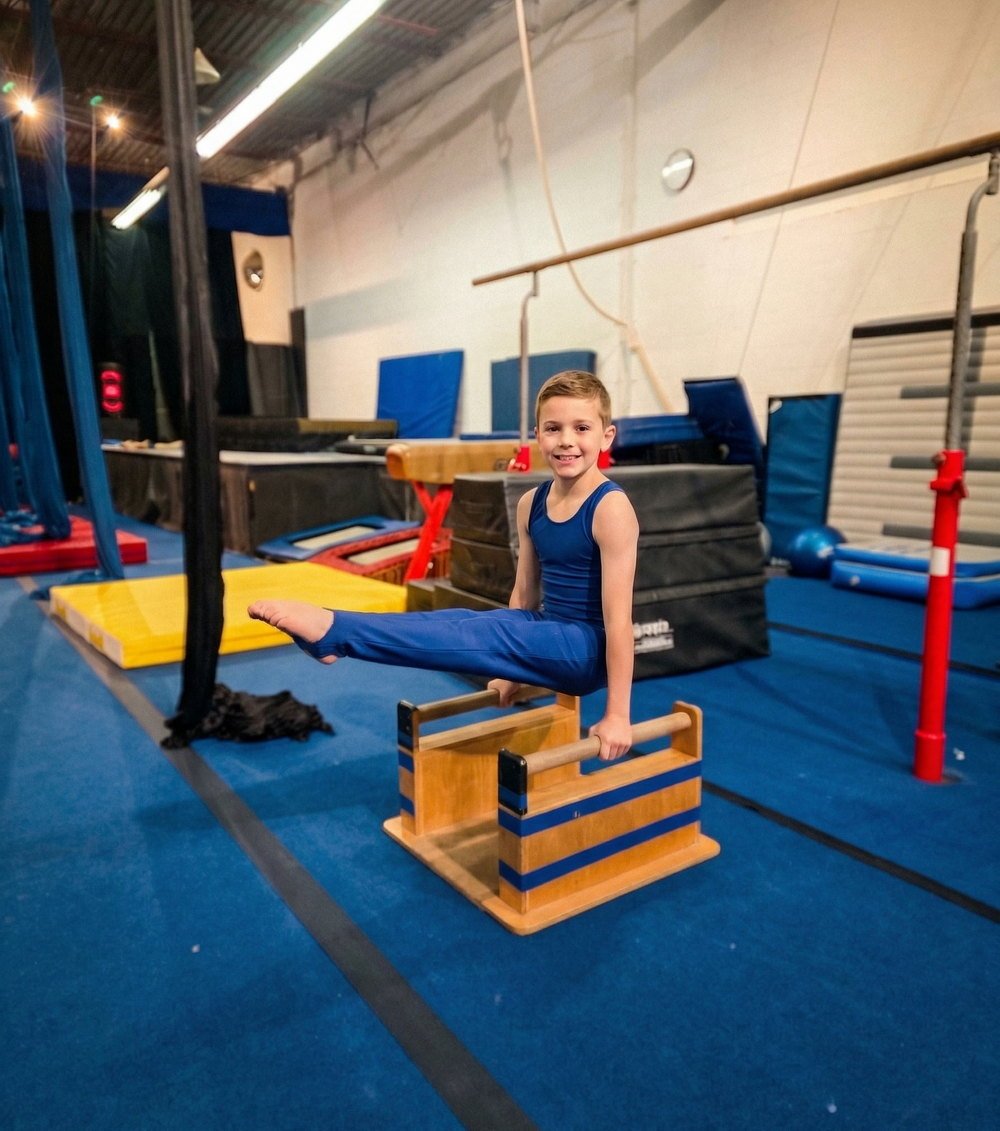
Some kids walk in knowing where their bodies are during movement. They land softly and hold their shapes well. Others have no real sense of that yet, and that is totally fine. In gymnastics classes in Pickering, coaches work on building this in kids who need it.
Gymnastics coaches are not looking for perfection early on. They just want to see how quickly a child can feel their position and fix it when we give them feedback. Here are a few signs coaches watch for in kids in the first few sessions:
- Whether a child lands with soft knees or stiff, locked legs
- How they hold their arms during a jump or balance, loose or controlled
- Whether they point their toes or let their feet hang
- How fast do they adjust after a correction
- Whether they can repeat the same body shape each time
How They Listen and Process Instructions
Listening is a skill. And in gymnastics classes in Pickering, it is one of the most useful things a young athlete can bring to class. We watch how a child takes in and uses verbal instruction. Do they make eye contact while being coached? Do they try to apply the feedback right away? Do they ask when something is unclear, or do they nod and then do the same thing again?
A child who listens and adjusts, even a little, will move forward faster than someone who is gifted physically but does not take coaching well.
Peer Interaction and Social Awareness
This one tends to surprise parents most. But how a child acts with their training partners in gymnastics classes in Pickering tells us a lot about how they will grow. Kids who cheer for others, wait their turn, and stay focused even when they are not the ones moving tend to get more out of each session. They are watching and learning even from the side. That kind of attention is a real asset.
What Coaches Notice in Group Settings
Here is what we watch during group work:
- Whether a child watches others and picks up on what they see
- How they react when a peer lands something they have not yet done
- Whether they support teammates or check out during others' turns
- How they handle waiting, whether they stay focused or drift off
- Whether they pick up good habits from watching more advanced athletes
Physical Qualities That Are Not About Strength
Strength can be built. Flexibility can be improved. But some physical traits show us a child's natural base in ways that are harder to train. In gymnastics classes in Pickering, coaches look at hip mobility, shoulder range, natural spring in a jump, and how the body sits at rest. None of these decides whether a child will succeed. But they help us know where to focus early on and what habits need to be fixed before they become hard to change.
Consistency Across Sessions
One class tells us very little. A kid might be tired or nervous. But after three to five sessions of gymnastics classes in Pickering, we start to get a clear picture of how a child learns. How steady is their effort? Do they show up ready to work? Do their skills look similar from week to week? Steady effort and focus across sessions is one of the best signs of long-term growth we can track.
Come See What Serious Technical Training Looks Like
Every child who walks into gymnastics classes in Pickering brings something different to the floor. Our coaches are trained to see it and build on it so every athlete can grow at their own pace. If you want your child in a place where the coaching is focused and the development goes beyond just what happens on the mat, get in touch today and book a trial class.
Frequently Asked Questions (FAQs)
Q: Do coaches judge children based on natural talent in gymnastics classes in Pickering?
Not at all. Coaches look at natural qualities to understand how to coach each child better, not to rank them. Every child grows differently, and good coaching adjusts based on what is right in front of us.
Q: What if my child is shy or nervous in their first class?
That is very common. A quiet or hesitant first session tells coaches something useful about how to work with that child. Most kids settle in within two or three sessions once they feel at ease and know what to expect.
Q: How long before a coach can assess a child's progress?
Most coaches need around three to five sessions to get a clear picture. One class is not enough. Early sessions are just as much about watching as they are about teaching.
Q: Can children with no athletic background do well in gymnastics?
Yes, and often very well. Kids without prior training tend to progress quickly because they have no old habits to fix. They are open and tend to take coaching well from the start.
Q: At what age is it best to start gymnastics classes in Pickering?
Five or six is a good starting point. But older beginners do fine too. The basics taught in early classes apply no matter what age a child starts.
Q: How do coaches handle children who get frustrated easily?
Frustration is a normal part of learning physical skills. Coaches deal with it by adjusting the difficulty, breaking skills into smaller steps, and making sure kids have enough early wins to stay motivated.
Q: What should my child wear to their first class?
Comfortable, fitted athletic clothing that allows free movement. Bare feet or gymnastics slippers work best on the floor. Avoid loose clothing, jewellery, or anything that could get caught while moving.

0 Comments