Most Parents Get This Wrong, and It's Understandable
Mention "gymnastics training" to a parent of a young child, and you'll get a look. Usually somewhere between confused and mildly concerned. And honestly, it makes sense.
Most of us grew up thinking gymnastics was something teenagers did, maybe younger if you were serious about a sport. So when someone brings up kids gymnastics in Pickering for a seven or eight year old, the natural reaction is to pause. But that hesitation, understandable as it is, might actually be holding kids back.
What This Actually Means in Practice
Nobody is suggesting you hand a six-year-old a barbell. That's not what this is. Kids gymnastics in Pickering, done properly, looks nothing like adult gym training.
It's about teaching kids to move well, control their own body weight, and build coordination through gymnastics, tumbling, and circus arts. No machines, no heavy loads. Just structured movement with coaches who understand how young bodies work. From the outside, it mostly just looks like kids learning cool stuff. The conditioning part is happening quietly in the background.
There's a Window Most Parents Don't Know About
Here's something that doesn't come up enough in these conversations. The years between roughly five and twelve are kind of a prime window for a child’s physical development. Not in a pressured, competitive way, just biologically. Motor patterns, coordination, body awareness; these things get built during childhood in ways that are harder to develop once you're older.
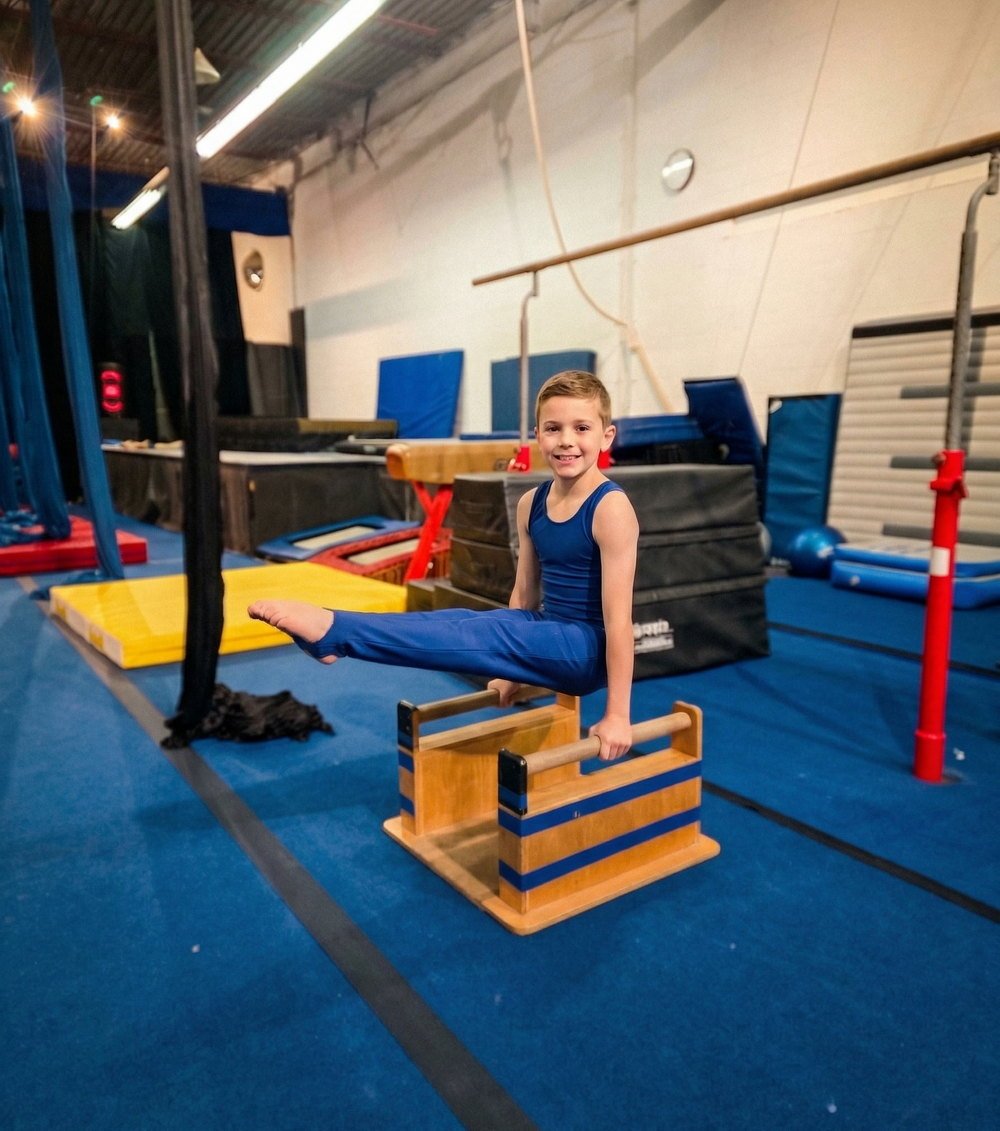
Boys gymnastics in Pickering that starts during this period tends to produce athletes who move more cleanly and adapt more easily to new physical challenges as they grow.
Miss that window, and you can still develop those qualities. It just takes longer, and you often spend part of the time correcting habits that formed without any guidance.
What Develops When Training Starts Early
Here's a rough picture of what tends to show up in kids who get structured physical training early on:
- Core strength that supports better posture and safer movement patterns
- Coordination between arms, legs, and core working together at the same time
- Spatial awareness, knowing where the body is and what it's doing while moving
- Grip and upper body strength from climbing and hanging
- Hip and leg stability from floor work and partner-based movement
- Stronger connective tissue, tendons, and ligaments that hold up better under athletic stress later on
Why Gymnastics and Circus Arts Work So Well for This
Kids training in circus arts or gymnastics aren't thinking about conditioning. They're thinking about nailing the handstand, getting higher on the silks, and landing the skill they've been working on. The physical development sort of tags along. And that's exactly what makes it effective.
Boys gymnastics in Pickering built into skill-based training sticks because the motivation comes from the skill itself, not from any abstract idea of getting fit. Climbing a silk is genuinely fun. It also builds grip strength, shoulder stability, and core control without feeling anything like a workout.
Here's what's actually happening physically in each activity:
- Aerial silks: grip strength, shoulder endurance, full-body core control
- Tumbling passes: leg power, timing, body tension through fast movement
- Handstand work: shoulder and wrist stability, full-body alignment
- Partner acrobatics: coordination with another person, reactive balance, core control
- Trampoline: explosive leg strength, body awareness in the air
The Safety Question Is a Fair One
Parents should ask about safety. The concern around kids and strength training usually comes from images of barbells and gym machines, and in that context, the concern is valid. But kids gymnastics in Pickering built around bodyweight movement and coached progressions is genuinely safe for young children.
The load is manageable because it's the child's own body weight. The progression is gradual and age-appropriate. Worth being honest, though: coaching quality matters a lot here. Not every program is built with the same level of care.
What Waiting Actually Costs
Kids who start physical training later often spend a chunk of their early sessions catching up on basics that earlier starters already have wired in. Body awareness. Coordination. Physical confidence in unfamiliar situations. These things aren't impossible to build later, but they take more time.
Kids gymnastics in Pickering that begins in childhood builds a foundation that's genuinely difficult to replicate at thirteen or fourteen. And sometimes it involves undoing movement habits that developed on their own, without any structured guidance, which adds extra work on top.
What to Actually Look For in a Program
Not every program related to boys gymnastics in Pickering is the same, so it's worth knowing what separates a good one from a generic one. Good coaches understand child development, not just athletic development.
The progression makes sense and builds challenge gradually. And the environment is one where kids want to come back, which sounds obvious but makes a real difference. Consistency is what produces results over time, and kids stay consistent when they enjoy what they're doing.
Final Thoughts
When conditioning is built into gymnastics, circus arts, and tumbling, it doesn't feel like exercise to the kids doing it. It feels like learning something worth knowing. ABS Gymnastics offers kids gymnastics in Pickering that starts early, giving young athletes a physical base that shapes how they move, compete, and hold up for years down the road. Get in touch with us to book a free trial class.
Frequently Asked Questions (FAQs)
Q: What age is appropriate to start strength and conditioning for kids in Pickering?
Most kids are ready around five or six. At that age, it’s really just about learning to move well and build coordination. Those years between five and twelve matter more than most parents think, so starting earlier is generally better than waiting.
Q: Is strength and conditioning safe for young children?
Yes, when it’s done right. Most parents worry because they picture barbells and gym machines. But training through gymnastics and circus arts uses bodyweight movement, not heavy loads.
Q: How is this different from a regular recreational sports class?
Recreational classes keep kids active, but they're not really focused on building physical skills in a structured way. Here, the focus is on movement quality, body control, and coordination.
Q: My child is not interested in competitive gymnastics. Is this still worth doing?
Yes, completely. Most kids in these programs aren't training to compete, and that's fine. The coordination, strength, and body awareness they build apply to any sport. Hockey, soccer, dance, it doesn't matter. The physical foundation is the same.
Q: How quickly will I see results?
Most parents start noticing small things within a few months. Better posture, more physical confidence, cleaner movement. The deeper stuff takes longer, usually six to twelve months of consistent training.
Q: What if my child has no prior athletic experience?
That's completely fine. These programs are built for kids starting from zero. Skills are introduced step by step, and kids without any prior experience often progress quickly because there are no old habits to work around.
Q: How do I know if a program is actually good for my child?
Here's the thing: look for coaches who understand how kids develop physically, not just how adults train. Check that the progression makes sense and builds gradually. And honestly, just watch whether your child wants to go back.
0 Comments